 World of Shrimp
Cherry shrimp water parameters: the numbers that matter
Published · Updated · 6 min read
Quick answer
Cherry shrimp are forgiving, but they need clean, steady water. Most guides suggest about 18–26 °C, pH 6.5–8.0, GH 4–8, KH 2–6 and TDS around 150–250 ppm. Ammonia and nitrite should always read 0, and nitrate should stay under 20 ppm. Keeping the numbers steady matters more than hitting a perfect value.
The numbers at a glance
These are typical guideline ranges for cherry shrimp (Neocaridina davidi), not strict rules. Sources disagree a little, so the table shows where most guides overlap.
| Parameter | Typical range | Why it matters |
|---|---|---|
| Temperature | 18–26 °C (64–79 °F) | Warm water shortens their life and holds less oxygen. Cooler water slows breeding. |
| pH | 6.5–8.0 | How acidic or alkaline the water is. Sudden changes stress shrimp. |
| GH | 4–8 dGH | Calcium and magnesium for building a new shell at each molt. |
| KH | 2–6 dKH | Keeps pH from swinging. With very low KH, pH can drop quickly. |
| TDS | About 150–250 ppm | A rough total of everything dissolved. Useful for spotting changes. |
| Ammonia | 0 ppm | Toxic even in small amounts. Comes from waste and rotting food. |
| Nitrite | 0 ppm | Also toxic. Any reading usually means the tank is not fully cycled. |
| Nitrate | Under 20 ppm | Much less harmful, but it builds up over time. Water changes keep it low. |
Some guides list wider ranges. Temperature tolerance is often given as about 16–28 °C (60–82 °F), GH up to 10, and KH up to 8 or more. Cherry shrimp can cope outside the table for a while. Staying near the middle of these ranges gives you room for small changes.
GH, KH and TDS in plain words
These three letters confuse almost every beginner. Here is what they mean.
- GH (general hardness) is the amount of calcium and magnesium in the water. Shrimp use these minerals to build a new shell every time they molt (shed their old shell to grow). Test kits show GH in degrees (dGH) or in ppm (parts per million). One degree is about 17.8 ppm.
- KH (carbonate hardness) measures carbonates and bicarbonates. Think of KH as a shock absorber for pH. With enough KH, pH stays steady. With very little, pH can swing quickly.
- TDS (total dissolved solids) is one number for everything dissolved in the water: minerals, waste, food and additives. It tells you how much is dissolved, but not what. Water can show a normal-looking TDS and still have almost no GH, so always test GH as well.
- pH is a scale from 0 to 14. A pH of 7 is neutral. Below 7 is acidic, above 7 is alkaline.
Steady water beats perfect numbers
Shrimp cope much better with a steady value inside the range than with sudden jumps. A quick change in temperature, TDS, GH, KH or pH can upset the timing of their molt. That can lead to a failed molt, where a shrimp gets stuck in its old shell and dies.
A few simple habits keep your water steady:
- Change a small amount of water at a time. Most guides suggest about 10 to 20 percent, once a week or every two weeks. Several warn against changing more than 20 percent at once.
- Make new water match the tank: the same temperature, conditioner added, and similar hardness.
- Add new water slowly, for example with a slow drip through airline tubing, instead of pouring it in.
- Top up evaporation with RO (purified) or distilled water. Evaporation leaves minerals behind, so topping up with tap water makes TDS creep up.
- Change one thing at a time, and change it slowly.
Our water change guide shows the whole process step by step.
How to test your water
You need two simple tools.
- A liquid test kit for ammonia, nitrite, nitrate and pH. GH and KH usually come as a separate small kit. You add drops to a tube of tank water and compare the color with a chart.
- A TDS meter. This is a cheap, pen-shaped meter. Dip it in the water and read the number after a few seconds. After you add a conditioner, wait a few minutes, because the reading can jump around at first.
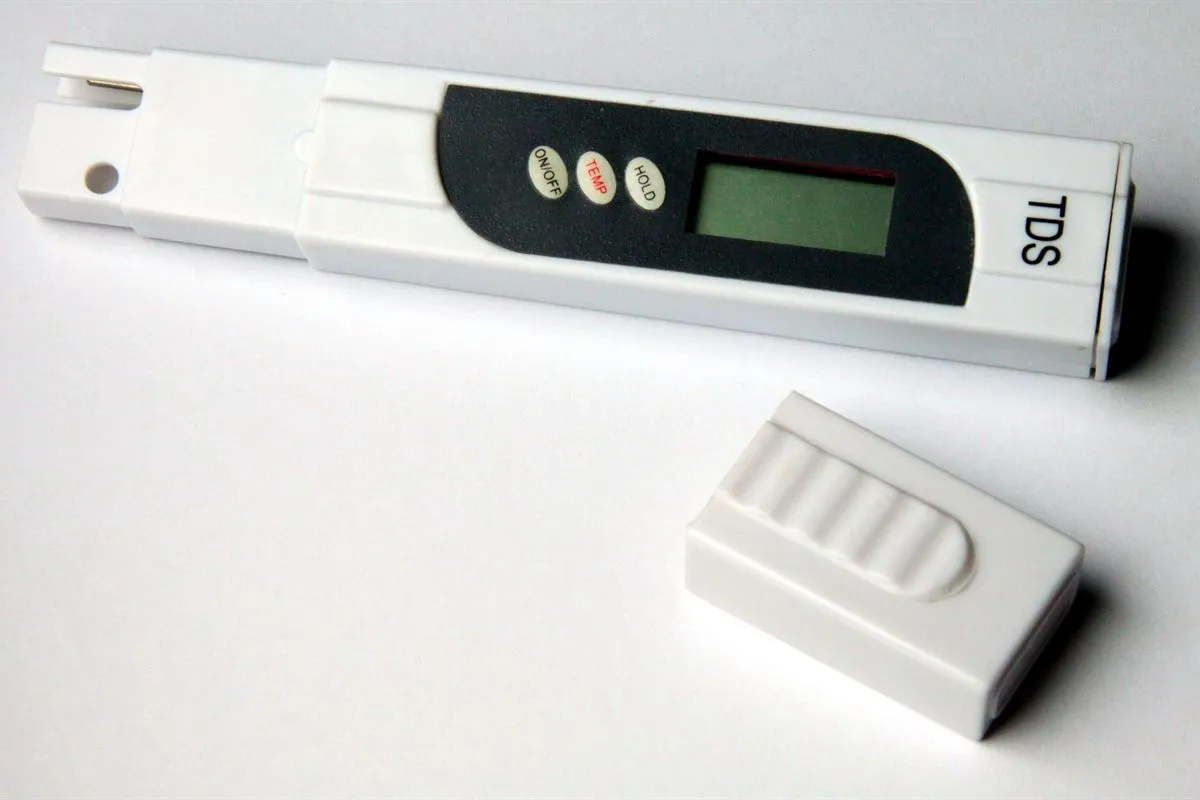
When to test. In an established tank, a weekly test is a good habit. Test ammonia and nitrite every few days while a tank is cycling, after you add new shrimp, and any time a shrimp dies or acts strangely.
Test your tap water too. Its TDS can vary by around 15 percent in a single day, so one reading does not tell you everything.
What to do when a number is off
Fix problems slowly. A fast correction can stress shrimp more than the problem itself.
| If you see this | Try this |
|---|---|
| Ammonia or nitrite above 0 | Do a small water change with conditioned water, feed less, and test daily until both read 0. In a new tank, the cycle may not be finished. |
| Nitrate above 20 ppm | Do small, regular water changes and feed less. |
| GH below 4 dGH | Add a GH remineralizer or mineral supplement made for shrimp tanks. Raise it slowly. |
| GH or TDS too high | Mix some RO or distilled water into your water changes. |
| KH very low, pH swinging | Raise KH slowly, for example with a little crushed coral in the filter. |
| Water warmer than 26 °C (79 °F) | Cool the room, keep the tank out of direct sun and add more surface movement for oxygen. |
If shrimp are already dying, start with our guide to why shrimp die. It lists what to check first.
FAQ
What is the most important water parameter for cherry shrimp?
Ammonia and nitrite at 0 come first, because both are toxic even in small amounts. After that, stability matters most. Steady GH, KH, pH and temperature are safer than numbers that are perfect one week and different the next.
Do I need a TDS meter?
It is not essential, but it is cheap and useful. A TDS meter quickly shows whether your water has changed, for example after a water change or a lot of evaporation. It does not tell you what is dissolved, so test GH and KH as well.
Is my tap water safe for cherry shrimp?
Often, yes. Treat it with a conditioner that removes chlorine and chloramine, then test pH, GH and KH and compare them with the table above. If the numbers are far outside these ranges, mix in RO water or use RO water with a shrimp remineralizer.
What does dGH mean?
dGH means degrees of general hardness, a German unit that most aquarium test kits use. One degree is about 17.8 ppm, so a GH of 6 dGH is roughly 107 ppm.
Sources
- Shrimp Science: Red Cherry Shrimp care guide
- Shrimp Science: Total Dissolved Solids (TDS) for Shrimp Tanks
- Shrimp Science: Shrimp Tank Water Changes
- Aquarium Co-Op: The Fish Keeper's Guide to pH, GH, and KH
- Aquarium Co-Op: Care Guide for Cherry Shrimp
- The Shrimp Farm: Red Cherry Shrimp (Neocaridina davidi) caresheet
- The Shrimp Farm: Failed Molting in Shrimp
- Flip Aquatics: Cherry Shrimp Guide
- Shrimp and Snail Breeder: Everything about TDS in Shrimp Tank
- Shrimp and Snail Breeder: How Long Do Dwarf Shrimp Live
- University of Florida IFAS Extension: Ammonia in Aquatic Systems
- U.S. Geological Survey: Dissolved Oxygen and Water
Keep reading
-
 How to set up a 20-liter shrimp tank
Equipment, substrate, plants, water and cycling, in the order you need them.
-
 Why are my shrimp dying? 8 common causes and what to check
The usual reasons shrimp die, and what to test first.
-
 How to do a water change in a shrimp tank
How much water to change, how often, and how to do it without stressing your shrimp.