 World of Shrimp
How to set up a 20-liter shrimp tank
Published · Updated · 7 min read
Quick answer
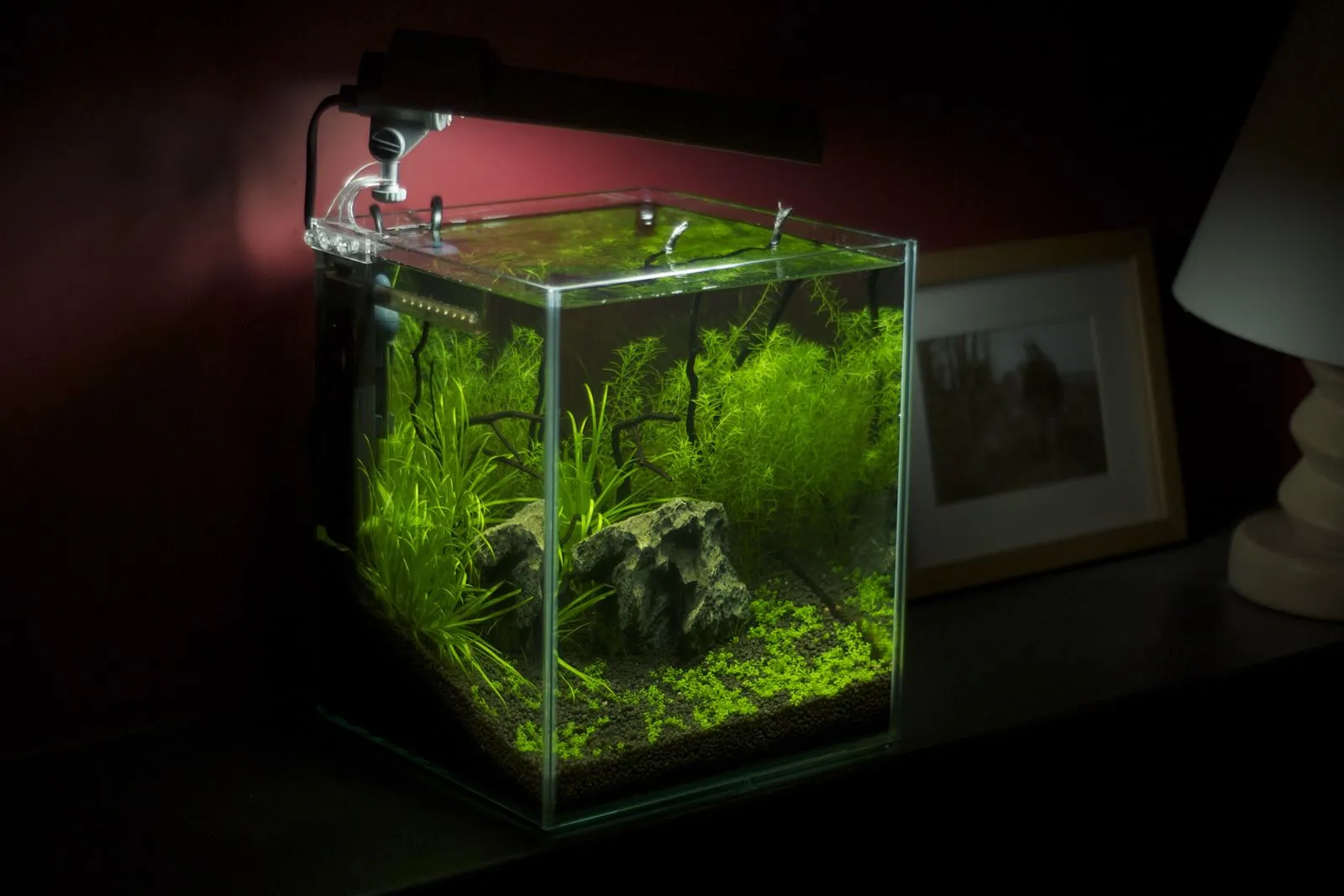
- Use a 20-liter (about 5-gallon) tank with a lid and a sponge filter.
- Add plain gravel or sand, live plants and some moss.
- Fill it with tap water treated with a water conditioner, or with purified RO water plus shrimp minerals.
- Let the tank cycle for about 4 to 6 weeks, until tests show 0 ammonia and 0 nitrite.
- Add the shrimp last: about 10 to start, moved over slowly.
Why 20 liters is a good first size
Shrimp do best when their water stays the same from day to day. The more water a tank holds, the slower it changes. Waste, warm days and evaporation all have a smaller effect.
Twenty liters is about 5.3 US gallons or 4.4 UK gallons. Many care guides name about 5 gallons (19 liters) as the smallest tank they recommend for cherry shrimp. Several suggest 10 gallons (about 38 liters) if you have the space.
So 20 liters is a sensible small start. A bigger tank is easier to keep stable, not harder. But a 20-liter tank still fits on a desk or a shelf, and a water change takes only a few minutes.
What you need
You don't need much. Here is a simple list for a 20-liter shrimp tank.
- Tank and lid. Put the tank on a level, sturdy surface. A lid cuts evaporation. When water evaporates, the minerals stay behind, so your readings slowly creep up.
- Sponge filter and a small air pump. A sponge filter is gentle, and baby shrimp can't get sucked into it. If you use another kind of filter, cover the intake with a pre-filter sponge to make it shrimp-safe.
- Light. A small LED aquarium light. You need it if you keep live plants.
- Heater, only if the room is cold. Most guides say cherry shrimp tolerate about 16 to 28 °C (60 to 82 °F), so many tanks don't need one.
- Water conditioner that removes both chlorine and chloramine.
- Test kit and thermometer. You will test a few values, each explained below. A TDS meter is a cheap, useful extra.
Substrate
Substrate is the gravel, sand or soil on the bottom of the tank. Cherry shrimp do not need special shrimp soil. Plain gravel or sand works well, because it does not change your water.
"Active" soils are different. They lower the pH (how acidic the water is) and the KH (carbonate hardness, which keeps pH steady). They are made for Caridina shrimp, such as crystal red shrimp, which need soft, acidic water. Active soil can also release ammonia for weeks or months, so the tank takes longer to get ready.
Guides suggest a layer from about 1 inch (2.5 cm) up to 3 inches. In a small tank, about 1 inch is common. Dark gravel or sand helps red shrimp stand out. Rinse new gravel or sand before you add it.
Plants and moss
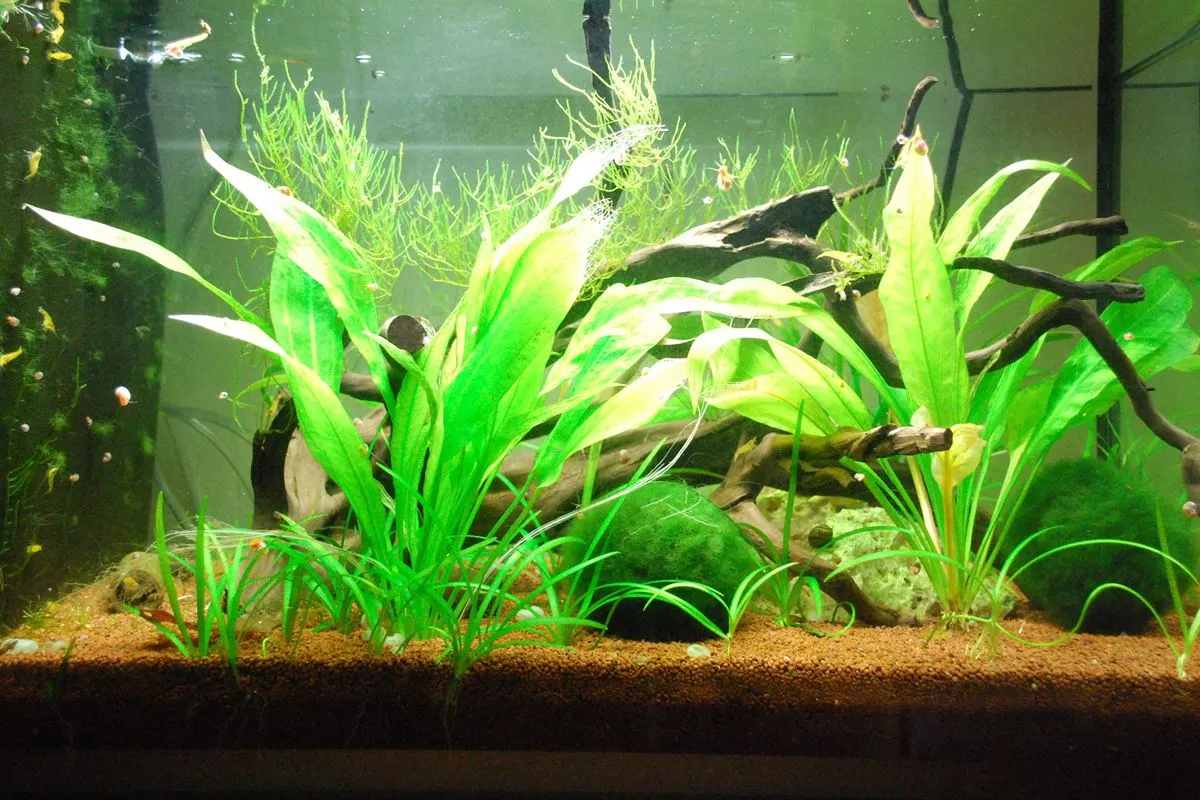
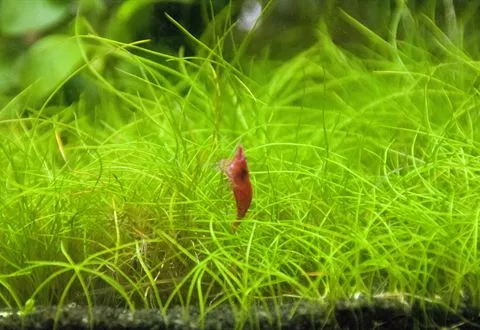
Live plants are not just decoration. Their leaves grow biofilm, a thin layer of bacteria, algae and tiny organisms. Biofilm is the main thing cherry shrimp eat, and they graze on it all day.
Plants also give shrimp cover. Shrimp shed their old shell to grow, which is called molting. Right after a molt the new shell is soft, so shrimp like a place to hide.
Mosses are a favorite, because they grow a lot of algae and biofilm for shrimp to pick at. Any plants sold as easy or low-light are a good start for a small tank.
Rinse new plants, and if you can, keep them in a bucket of water for about a week before they go in. Some plants are treated against snails, and those treatments can contain copper, which is toxic to shrimp.
Water
You have two simple options.
- Tap water with a water conditioner. Many cities treat tap water with chloramine instead of chlorine. Chloramine does not go away if you let the water stand; it can take weeks. Use a conditioner that says it removes chloramine, every time you add new water.
- RO water plus a shrimp remineralizer. RO (reverse osmosis) water is almost pure water. A remineralizer adds back the minerals shrimp need. This gives you full control, but it costs more and takes more work.
Two numbers matter most when you choose your water:
- GH (general hardness) is the amount of calcium and magnesium in the water. Shrimp need these minerals to build each new shell. If GH is too low, they can struggle to molt.
- TDS (total dissolved solids) is everything dissolved in the water, shown as one number. A cheap TDS meter measures it in a few seconds. It helps you spot changes.
Test your tap water for pH, GH and KH before you buy shrimp. Then compare it with the ranges in our water parameters guide.
Cycling the tank
A new tank has none of the good bacteria that keep water clean. Shrimp waste and leftover food break down into ammonia, which is toxic. One group of bacteria turns ammonia into nitrite, which is also toxic. A second group turns nitrite into nitrate, which is much less harmful. This is called the nitrogen cycle.
"Cycling" means growing these bacteria before any shrimp go in. Shrimp are very sensitive to ammonia and nitrite, so they should only go into a fully cycled tank.
To cycle, run the filter and feed the bacteria. Add a pinch of fish food every day for the first week, or dose pure ammonia from a bottle to about 2 to 4 ppm (parts per million). Then test the water every few days.
Most shrimp guides say cycling takes about 4 to 6 weeks. A university fact sheet on aquarium water says a new filter needs 6 to 8 weeks to grow enough bacteria. So don't rush it.
| Test | While the tank is cycling | Ready for shrimp |
|---|---|---|
| Ammonia | Rises, then falls | 0 |
| Nitrite | Rises after ammonia, then falls | 0 |
| Nitrate | Starts to show up | Showing, ideally under 20 ppm after a water change |
When ammonia and nitrite both read 0 and nitrate is showing, the cycle is done. Do a water change to bring nitrate down before you add shrimp. Many keepers wait a few more weeks so biofilm can build up. That way, new shrimp have food from day one.
Adding the shrimp
How many. Most guides suggest starting with about 10 cherry shrimp. A group of 10 is very likely to include both males and females, so the colony can grow on its own.
Move them over slowly. The water your shrimp come in can be very different from yours. Use the drip method in our acclimation guide.
No copper. Copper is toxic to shrimp, even in tiny amounts. Check the label of every fish medicine, plant fertilizer and food before it goes in the tank. Treat sick fish in a separate tank.
Tank mates. Almost all fish will eat baby shrimp, so a shrimp-only tank is the simplest choice. Most snails are fine with shrimp. Our tank mates guide has the details.
FAQ
Do cherry shrimp need a heater?
Usually not. Most guides say cherry shrimp tolerate about 16 to 28 °C (60 to 82 °F), so normal room temperature is fine. Add a small heater only if your room often gets colder than that.
How long should I wait before adding shrimp?
Wait until the tank is cycled: ammonia and nitrite both read 0 and nitrate is showing. This usually takes about 4 to 6 weeks, sometimes longer. A few extra weeks let biofilm grow, so new shrimp have food from day one.
Can I use tap water for shrimp?
Yes, in many areas. Treat it with a water conditioner that removes chlorine and chloramine, and test pH, GH and KH to check they suit cherry shrimp. If your tap water is far outside those ranges, RO water with a shrimp remineralizer is the safer choice.
Sources
- Shrimp Science: Red Cherry Shrimp care guide
- Shrimp Science: Shrimp Tank Cycling
- Shrimp Science: The Guide to Substrates for Shrimp Tanks
- Shrimp Science: Total Dissolved Solids (TDS) for Shrimp Tanks
- Shrimp Science: Why Are My Freshwater Shrimp Dying?
- Shrimp and Snail Breeder: Basic Shrimp Tank Setup for Neocaridina
- Shrimp and Snail Breeder: How Copper Affects Dwarf Shrimp
- Aquarium Co-Op: Care Guide for Cherry Shrimp
- The Shrimp Farm: Red Cherry Shrimp (Neocaridina davidi) caresheet
- Flip Aquatics: Cherry Shrimp Guide
- University of Florida IFAS Extension: Ammonia in Aquatic Systems
- City of Sioux Falls: Chloramines and Fish (PDF)
Keep reading
-
 Cherry shrimp water parameters: the numbers that matter
Typical ranges for temperature, pH, GH, KH and TDS, and what to do when a number is off.
-
 How to acclimate shrimp (drip method, step by step)
A slow, simple way to move new shrimp into your tank without shocking them.
-
 Why are my shrimp dying? 8 common causes and what to check
The usual reasons shrimp die, and what to test first.