 World of Shrimp
Tap water or RO water for shrimp?
Published · Updated · 6 min read
Quick answer
- For cherry shrimp, treated tap water usually works, as long as its hardness fits.
- Always use a water conditioner. Chlorine slowly leaves standing water, but chloramine does not.
- RO water is water with almost everything removed. It needs a shrimp remineralizer before it goes in the tank.
- For cherry shrimp, choose a remineralizer that adds both GH and KH. GH-only products are made for soft-water Caridina.
- Top up evaporated water with plain RO or distilled water.
Using tap water
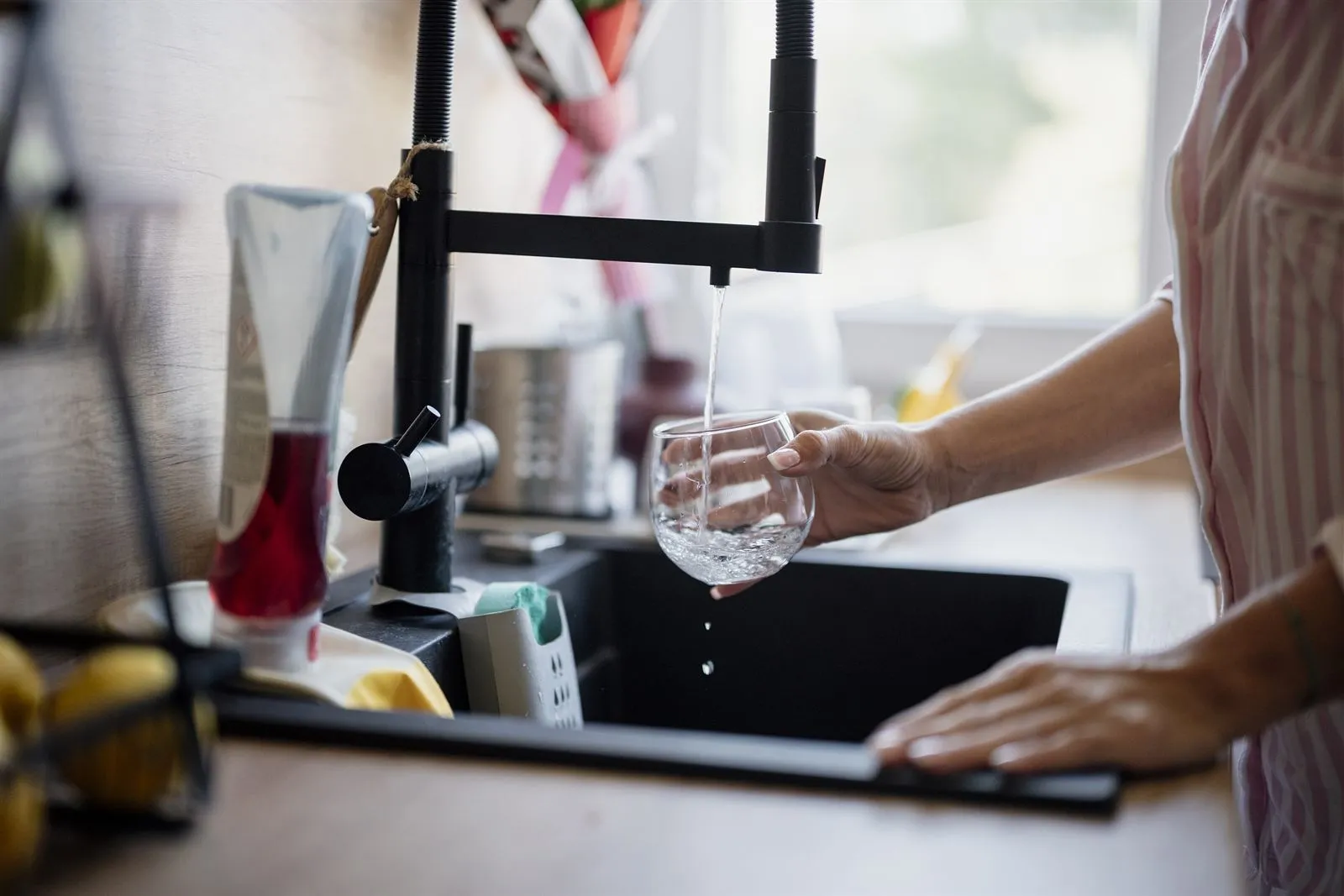
Cherry shrimp are adaptable. Shrimp and Snail Breeder says ordinary tap water works for them once it is treated. The question is whether your tap water's hardness fits. Test it after adding conditioner, or look up the water report from your supplier, which usually lists hardness too.
| Test | Typical range for cherry shrimp | If your tap water is outside it |
|---|---|---|
| GH | 4–8 dGH | Too high: mix in RO water. Too low: add a shrimp remineralizer. |
| KH | 2–6 dKH | Too high: mix in RO water. Too low: raise it slowly. |
| pH | 6.5–8.0 | Usually follows KH. Fix KH first. |
| TDS | About 150–250 ppm | Very high: mix in RO water. |
GH (general hardness) is the calcium and magnesium shrimp need to build a new shell. KH (carbonate hardness) keeps pH from swinging. TDS (total dissolved solids) is a rough total of everything dissolved. dGH and dKH are degrees of hardness, and ppm means parts per million. The water parameters guide explains each number and where these ranges come from.
Mixing works in simple proportion. Half tap water and half RO water gives you roughly half the hardness and half the TDS.
Well water is different. It usually has no chlorine, but Aquarium Co-Op suggests testing it for heavy metals instead.
Chlorine and chloramine
Water suppliers add a disinfectant to keep tap water safe to drink. It is harmless to you, but it harms shrimp and kills the bacteria in your filter. There are two kinds:
| Feature | Chlorine | Chloramine |
|---|---|---|
| What it is | A simple, unstable disinfectant | Chlorine joined with ammonia, more stable |
| Does standing water lose it? | Yes, slowly. Aquarium Co-Op says 1 to 5 days; an air stone speeds it up | No. It does not evaporate |
| What removes it | Water conditioner, or time | Only water conditioner |
Many suppliers use chloramine because it lasts longer in the pipes. Unless you know for sure that yours uses only chlorine, use a conditioner every time.
Chloramine contains ammonia. When a conditioner breaks it apart, a little ammonia can be left behind. Aquarium Co-Op notes that some conditioners also bind ammonia for up to 24 hours, and Shrimp and Snail Breeder says Seachem Prime does so for up to 48 hours. In a cycled tank, the filter bacteria deal with the rest.
Choosing and dosing a conditioner
Most conditioners use a chemical called sodium thiosulfate, which turns chlorine and chloramine into harmless products. Choose one that treats both. Shrimp and Snail Breeder prefers complete conditioners, which also deal with heavy metals such as copper.
Doses differ a lot between brands:
| Conditioner | Dose on the label |
|---|---|
| Seachem Prime | 5 ml per 50 US gallons (about 190 liters) |
| API Tap Water Conditioner | 1 ml per 20 US gallons (about 76 liters) |
| Aquarium Co-Op Easy Dechlorinator | 1 ml per 10 US gallons (about 38 liters) |
| Tetra AquaSafe Plus | 5 ml per 10 US gallons (about 38 liters) |
Always follow the label of the bottle you have, and do not overdose. The label of one common conditioner warns that an overdose can kill invertebrates. The safest habit is to treat the water in the bucket and wait a few minutes. Shrimp and Snail Breeder suggests at least 5 minutes before it goes into the tank.
When RO water makes sense
RO stands for reverse osmosis. An RO unit pushes tap water through a very fine membrane that removes almost everything dissolved in it. Shrimp Science notes that RO and distilled water should start at a TDS of about 0. That makes them a clean base you can build up yourself.
RO water is worth it when:
- your tap water is much harder, or has a much higher TDS, than your shrimp like
- you keep soft-water Caridina, such as crystal red or bee shrimp. Shrimp Science highly recommends mixing your own water for them.
- you want the same water every time, whatever your supplier does
- you need water for topping up evaporation
Never put plain RO water into the tank as a water change. It has almost no minerals, and shrimp need them to molt. Plain RO water is only for topping up, because evaporation leaves the minerals behind in the tank.
How to remineralize RO water
A remineralizer is a mineral salt made for shrimp tanks. There are two main types:
- GH/KH+ adds both GH and KH. Shrimp Science calls it the recommended type for Neocaridina, such as cherry shrimp.
- GH+ adds GH only, with no KH. It suits Caridina, which need KH near 0.
- Measure the RO water into a clean bucket used only for the tank.
- Add a little remineralizer and stir until it has fully dissolved. Shrimp Science warns that TDS keeps rising while the salt dissolves, and that it is easier to add more than to dilute.
- Check the TDS, and if you can, the GH. A TDS meter gives a rough idea, but a GH test is more reliable.
- Let the water reach room temperature, then add it slowly during the water change.
Shrimp Science gives this rough guide for a GH/KH+ type remineralizer. Other brands differ, so treat it as a starting point:
| GH | KH | Approximate TDS |
|---|---|---|
| 4 dGH | 2 dKH | About 128 ppm |
| 5 dGH | 2.5 dKH | About 160 ppm |
| 6 dGH | 3 dKH | About 192 ppm |
Whichever water you use, make each batch the same as the last. A steady routine matters more than hitting one exact number. The water change guide covers the rest.
FAQ
Can I use tap water for cherry shrimp?
Usually yes. Add a water conditioner that treats chlorine and chloramine, and test GH, KH and TDS. If the numbers fit the cherry shrimp range, treated tap water works well.
Does letting tap water sit remove chlorine?
It removes chlorine over one to several days, but not chloramine. Many water suppliers use chloramine, so the safe choice is to use a conditioner every time.
Can shrimp live in pure RO water?
No. RO water has almost no minerals, and shrimp need calcium and magnesium to build a new shell at each molt. Add a shrimp remineralizer before RO water goes into the tank. The only exception is topping up evaporated water.
Which remineralizer should I use for cherry shrimp?
One that raises both GH and KH, usually sold as GH/KH+. Shrimp Science calls this the recommended type for Neocaridina. GH+ products without KH are made for soft-water Caridina shrimp.
Sources
- Aquarium Co-Op: Water Conditioner: How It Works and How Much to Use in Aquariums
- Shrimp and Snail Breeder: Do We Need Water Conditioners? Which One to Choose
- Shrimp and Snail Breeder: Basic Shrimp Tank Setup for Neocaridina
- Shrimp Science: How To Remineralize Water for Shrimp Tanks
- Shrimp Science: Shrimp Tank Water Changes
- Shrimp Science: Red Cherry Shrimp Care Guide
Keep reading
-
 Cherry shrimp water parameters: the numbers that matter
Typical ranges for temperature, pH, GH, KH and TDS, and what to do when a number is off.
-
 How to do a water change in a shrimp tank
How much water to change, how often, and how to do it without stressing your shrimp.
-
 Neocaridina vs Caridina: which shrimp should you start with?
Cherry shrimp versus crystal and bee shrimp: water, substrate, difficulty and sharing a tank.