 World of Shrimp
Substrate for a shrimp tank: gravel, sand or active soil?
Published · Updated · 5 min read
Quick answer
- For cherry shrimp, inert gravel or sand is the simple choice. Inert means it does not change the water.
- Active soil lowers pH and softens the water. It is made for Caridina shrimp, and most guides say cherry shrimp do not need it.
- Keep the layer fairly thin. Guides suggest roughly 1 to 7.5 cm (0.5 to 3 inches).
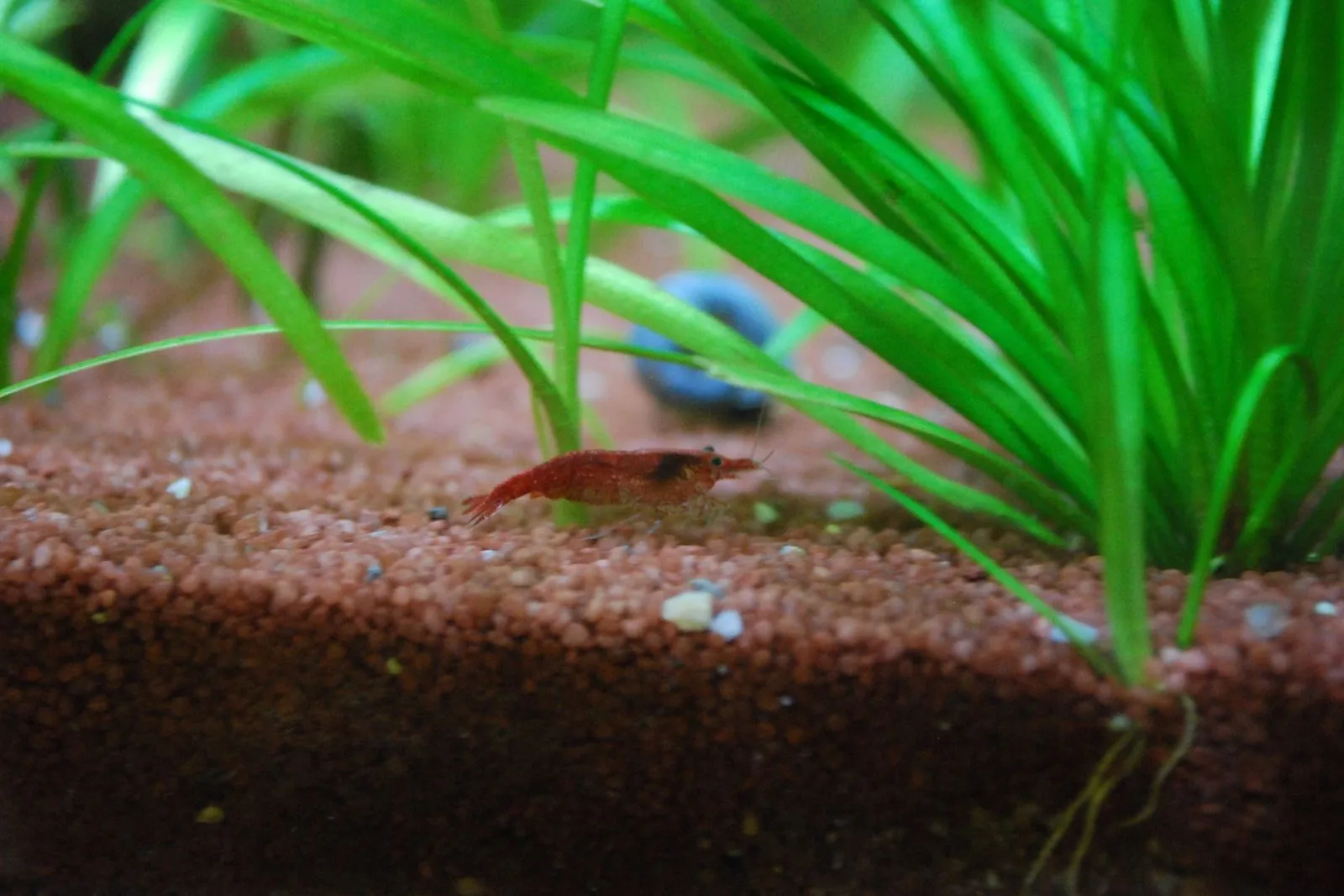
- A dark color helps red shrimp show their color and hides dirt.
The three main types
Substrate is the layer on the bottom of the tank. In a shrimp tank it holds plant roots and gives shrimp a surface to pick through for food. Some types also change the water.
| Type | Changes the water? | Good for | Watch out for |
|---|---|---|---|
| Inert gravel | No | Cherry shrimp and beginners | Few downsides. Vacuum it lightly during water changes. |
| Inert sand | No | Cherry shrimp | Can pack down and form pockets without oxygen if the layer is deep. |
| Active soil | Yes, it lowers pH and KH | Caridina shrimp | Releases ammonia at first. Keeps working for about 12 to 18 months. |
Inert gravel
Shrimp Science calls gravel perhaps the lowest-maintenance substrate there is. It does not pack down. The small gaps let water reach plant roots, and they give a home to detritus worms, tiny harmless worms that eat waste.
Inert sand
Sand looks natural, and Shrimp and Snail Breeder prefers it in a thin layer. The risk is that sand packs down. Deep, packed sand can form pockets without oxygen, where bacteria make hydrogen sulfide, a toxic gas. To prevent this, keep the layer thin and poke it with a stick during water changes. Malaysian trumpet snails, which burrow through sand, also help.
Active soil
Active soil is made of baked soil granules. It softens the water and pulls the pH down, and it keeps holding the pH there. This is called buffering. pH is the scale of how acidic the water is, and KH (carbonate hardness) is what keeps pH from swinging.
Active soil has two catches. First, it releases ammonia for the first weeks or months, so Shrimp Science suggests letting the tank cycle and mature for a couple of months before adding shrimp. Second, it wears out. Shrimp Science says it buffers well for about 12 to 18 months, then becomes less effective.
Which shrimp need what
| Shrimp | Preferred water | Substrate |
|---|---|---|
| Cherry shrimp and other Neocaridina | pH around 7 or a little above, with some KH | Inert gravel or sand |
| Crystal red, bee and other soft-water Caridina | pH about 5.5 to 6.5, with KH near 0 | Active soil |
Cherry shrimp do not need active soil. Shrimp Science explains that the water they like keeps its own pH steady through its KH. Flip Aquatics goes further and advises against shrimp soil for cherry shrimp, because it often keeps the water too soft for them.
Soft-water Caridina are different. They need acidic water with almost no KH, and active soil helps keep it that way. See Neocaridina vs Caridina for the full comparison.
If you want to feed rooted plants in inert gravel, root tabs are a common option. These are fertilizer tablets pushed into the substrate. Check that any fertilizer is safe for shrimp.
How deep to make it
| Guide | Suggested depth |
|---|---|
| Shrimp Science | 1 to 3 inches (2.5 to 7.5 cm) |
| Shrimp and Snail Breeder | 0.5 to 1 inch (1 to 2.5 cm) |
Both guides warn that a deeper layer raises the risk of gas pockets. Shrimp Science adds that a very thin layer may not hold its shape against the flow from the filter. If you want more height at the back of the tank, it suggests burying a few pieces of lava rock instead of adding more substrate.
Light or dark?
Most shrimp keepers choose a dark substrate. Shrimp Science notes that deeply colored shrimp, such as red cherries, keep their color better on dark ground, and that dark substrate hides waste. A light substrate looks bright but shows dirt quickly, needs vacuuming more often, and may make shrimp turn paler over time.
Adding it to the tank
- Rinse inert gravel or sand in a bucket until the water runs mostly clear.
- Do not rinse active soil. Shrimp Science advises against it. Follow the instructions on the bag.
- Spread it evenly, then place rocks, wood and plants.
- Fill the tank slowly. Pour the water onto a plate or a plastic bag so it does not dig holes in the substrate.
- Cycle the tank before any shrimp go in. See how to cycle a shrimp tank.
FAQ
Do cherry shrimp need active soil?
No. Cherry shrimp do well on inert gravel or sand. Active soil lowers pH and softens the water, which suits Caridina shrimp. Flip Aquatics advises against it for cherry shrimp, because it often keeps the water softer than they like.
How deep should the substrate be in a shrimp tank?
Guides suggest roughly 1 to 7.5 cm (0.5 to 3 inches). A deep layer, especially of sand, can form pockets without oxygen, so most shrimp tanks use a fairly thin layer.
What color substrate is best for red cherry shrimp?
Dark. Shrimp Science notes that deeply colored shrimp such as red cherries keep their color better on a dark substrate, and it hides waste. On a light substrate they may turn paler over time.
How long does active soil last?
Shrimp Science says active soil keeps buffering well for about 12 to 18 months. After that it slowly becomes less effective and needs replacing.
Sources
- Shrimp Science: The Guide to Substrates for Shrimp Tanks
- Shrimp Science: The Beginner's Guide to Freshwater Shrimp Tanks
- Shrimp and Snail Breeder: Basic Shrimp Tank Setup for Neocaridina
- Flip Aquatics: Setting Up a Neocaridina Shrimp Tank: Beginner's Guide
- Flip Aquatics: Caridina vs Neocaridina
- Aquarium Co-Op: Everything You Need for a New Fish Tank
Keep reading
-
 Shrimp tank shopping list: what you actually need
The equipment a first cherry shrimp tank needs, what is nice to have and what you can skip.
-
 Neocaridina vs Caridina: which shrimp should you start with?
Cherry shrimp versus crystal and bee shrimp: water, substrate, difficulty and sharing a tank.
-
 Best plants for a shrimp tank: 5 easy, low-light choices
Java moss, Anubias, Java fern, Bucephalandra and floating plants, and how to use them.