 World of Shrimp
Shrimp tank shopping list: what you actually need
Published · Updated · 6 min read
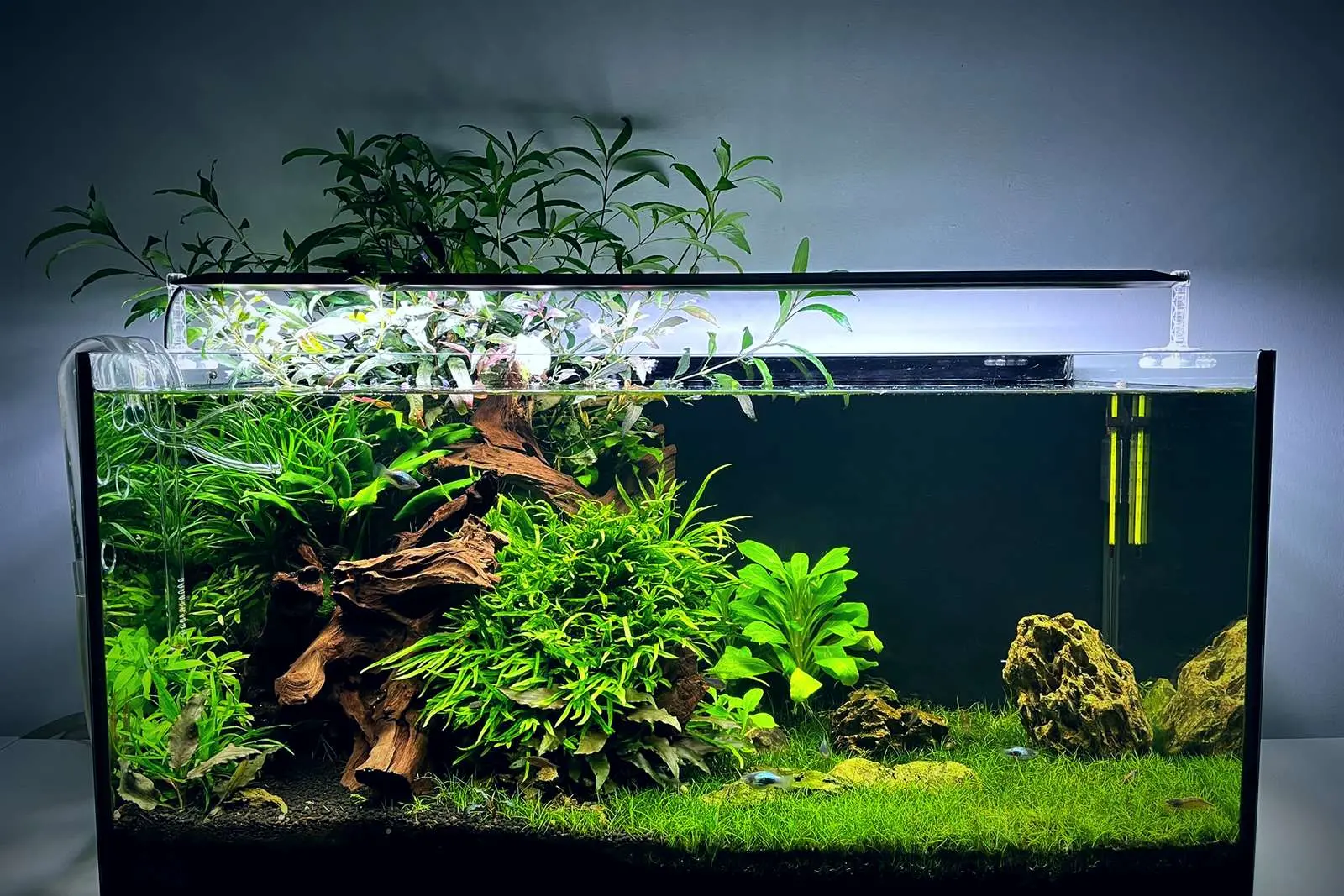
Quick answer
- Essentials: a tank with a lid, a sponge filter with an air pump, inert gravel or sand, water conditioner, a test kit, a thermometer, and a bucket with a siphon.
- Nice to have: a light and a few easy plants, a TDS meter, and a small heater if your room gets cold.
- Skip at first: active soil, fish, and filters that can pull in baby shrimp.
- Buy the shrimp last. The tank needs about 4 to 8 weeks to cycle first.
Before you buy anything
A shrimp tank is cheap to set up, but it is slow to start. Before any shrimp go in, the tank has to grow the bacteria that break down waste. This is called cycling. Most guides say it takes about 4 to 8 weeks. So buy the equipment first and the shrimp last.
This list is for Neocaridina shrimp, such as cherry shrimp. They are the usual first choice because they are hardy and live well in treated tap water. If you are thinking about crystal or bee shrimp, read Neocaridina vs Caridina first, because they need different water and substrate.
The essentials
| Item | Why you need it | What to look for |
|---|---|---|
| Tank | Home for the shrimp. More water stays stable for longer. | Most guides suggest at least 5 gallons (19 liters). 10 gallons (38 liters) is a common first choice. See tank size. |
| Lid | Shrimp can climb out, and a lid slows evaporation. | A glass or plastic cover with a small gap for tubing. |
| Sponge filter | Holds the bacteria that break down waste, and cannot pull in baby shrimp. | One rated for a bigger tank than yours. See sponge filters. |
| Air pump, airline tubing, check valve | The pump runs the sponge filter. The check valve stops water flowing back into the pump if the power goes off. | A small pump sized for your tank, and enough tubing to reach it. |
| Substrate | A place for plant roots, and a surface for shrimp to pick through for food. | Inert gravel or sand, which does not change the water. See substrate. |
| Water conditioner | Makes tap water safe by neutralizing chlorine and chloramine. | One that treats both and is marked safe for shrimp or invertebrates. See tap water and RO water. |
| Test kit | Shows when the tank has cycled and whether the water suits shrimp. | Tests for ammonia, nitrite and nitrate, plus GH and KH. Liquid tests or strips. |
| Thermometer | Shows the water temperature, which matters most in summer. | Any simple aquarium thermometer. |
| Bucket and siphon | For water changes. | A bucket used only for the tank, and a small siphon or a length of airline tubing. |
Two terms from the table: GH (general hardness) is the amount of calcium and magnesium in the water, which shrimp need to build a new shell. KH (carbonate hardness) shows how well the water resists sudden changes in pH. The water parameters guide explains the numbers.
Nice to have
- A light. Shrimp do not need one, but plants do. Without live plants, normal room light is enough. Many keepers use a simple LED light on a timer.
- Live plants. They give shrimp cover and take up some waste. Java moss, Anubias and Java fern are hardy and need little light. See plants for shrimp.
- A heater. Only if your room gets cold or the temperature swings a lot. Shrimp Science says cherry shrimp live comfortably at about 15 to 30 °C (59 to 86 °F). See temperature.
- A TDS meter. TDS (total dissolved solids) is a rough measure of everything dissolved in the water. A cheap meter makes it easy to check that new water matches the tank.
- Hiding places. A piece of driftwood, a few rocks or some dried leaves give shrimp somewhere to hide after a molt, when they shed their old shell.
- A small fine net, for moving shrimp when you need to.
What you can skip at first
- Active soil. It lowers pH and softens the water. It is made for Caridina shrimp, which need soft, acidic water. Flip Aquatics advises against it for cherry shrimp, because it often keeps the water too soft for them.
- A strong power filter without a guard. Hang-on-back and canister filters can pull in baby shrimp. If you already own one, cover the intake with a sponge.
- Fish. Most fish eat baby shrimp. Start with shrimp alone, and read about tank mates before you add anything else.
- Medicines and fertilizers you have not checked. Some contain copper, which is toxic to shrimp. See why shrimp die.
In what order to buy
- Tank, lid, filter, air pump and substrate. Set them up and fill the tank with treated water.
- Test kit and a source of ammonia to start the cycle. The cycling guide explains how.
- Plants. They can go in at the start. They bring helpful bacteria with them.
- Shrimp, last. Wait until ammonia and nitrite read 0 and a water change has brought nitrate down. Then read how to buy healthy shrimp and how to acclimate them.
For a full example of how these parts fit together, see how to set up a 20-liter shrimp tank.
FAQ
Do cherry shrimp need a heater?
Often not. Shrimp Science says cherry shrimp live comfortably at about 15 to 30 °C, so a tank in a heated room may not need one. A small heater helps if the room gets cold or the temperature swings a lot, especially in a small tank.
Do shrimp need a light?
The shrimp themselves do not. A light is for plants. Without live plants, normal room light is enough. With plants, a simple LED light on a timer is the easy option.
What filter is best for a shrimp tank?
Most shrimp guides recommend a sponge filter run by an air pump. It is cheap and gentle, it cannot pull in baby shrimp, and shrimp graze on its surface.
Sources
- Shrimp Science: The Beginner's Guide to Freshwater Shrimp Tanks
- Shrimp Science: Do Shrimp Tanks Need a Heater?
- Shrimp and Snail Breeder: Basic Shrimp Tank Setup for Neocaridina
- Shrimp and Snail Breeder: Do We Need Water Conditioners? Which One to Choose
- Aquarium Co-Op: Everything You Need for a New Fish Tank
- Aquarium Co-Op: Sponge Filters: The Easiest Fish Tank Filter Ever
- Aquarium Co-Op: The Beginner's Guide to the Nitrogen Cycle for Aquariums
- Flip Aquatics: Setting Up a Neocaridina Shrimp Tank: Beginner's Guide
Keep reading
-
 What size tank do cherry shrimp need?
The smallest sizes guides accept, why 10 gallons (38 liters) is a common first choice, and how many shrimp fit.
-
 How to cycle a new shrimp tank, week by week
What the nitrogen cycle is, how to run a fishless cycle and when it is safe to add shrimp.
-
 How to set up a 20-liter shrimp tank
Equipment, substrate, plants, water and cycling, in the order you need them.